

Developmental Screenings in Fort Lauderdale: A Parent’s Guide

Reviewed By: Guerlyne Desir, FNP-BC

A child who is slower to speak, walk, play with others, or reach a new milestone may leave parents with many questions. Sometimes the difference is simply part of an individual developmental pace. Other times, it may be worth taking a closer look.
Developmental screenings give parents and pediatric providers a structured way to review a child’s progress in areas such as movement, language, learning, behavior, and social interaction. For families in Fort Lauderdale, these screenings can be an important part of routine pediatric care, especially when a parent, caregiver, teacher, or pediatrician has a developmental concern.
The goal is not to label a child. It is to understand how development is progressing and decide whether any additional evaluation or support may be helpful.
What You'll Learn From This Article
- What developmental screening means and how it differs from everyday monitoring
- Which areas of child development may be reviewed
- When developmental screenings are commonly recommended
- What happens during a screening visit
- When a developmental concern deserves a conversation with your pediatrician
- What may happen if a screening result suggests closer evaluation
- How parents can prepare for a developmental screening in Fort Lauderdale
What Is Developmental Screening?
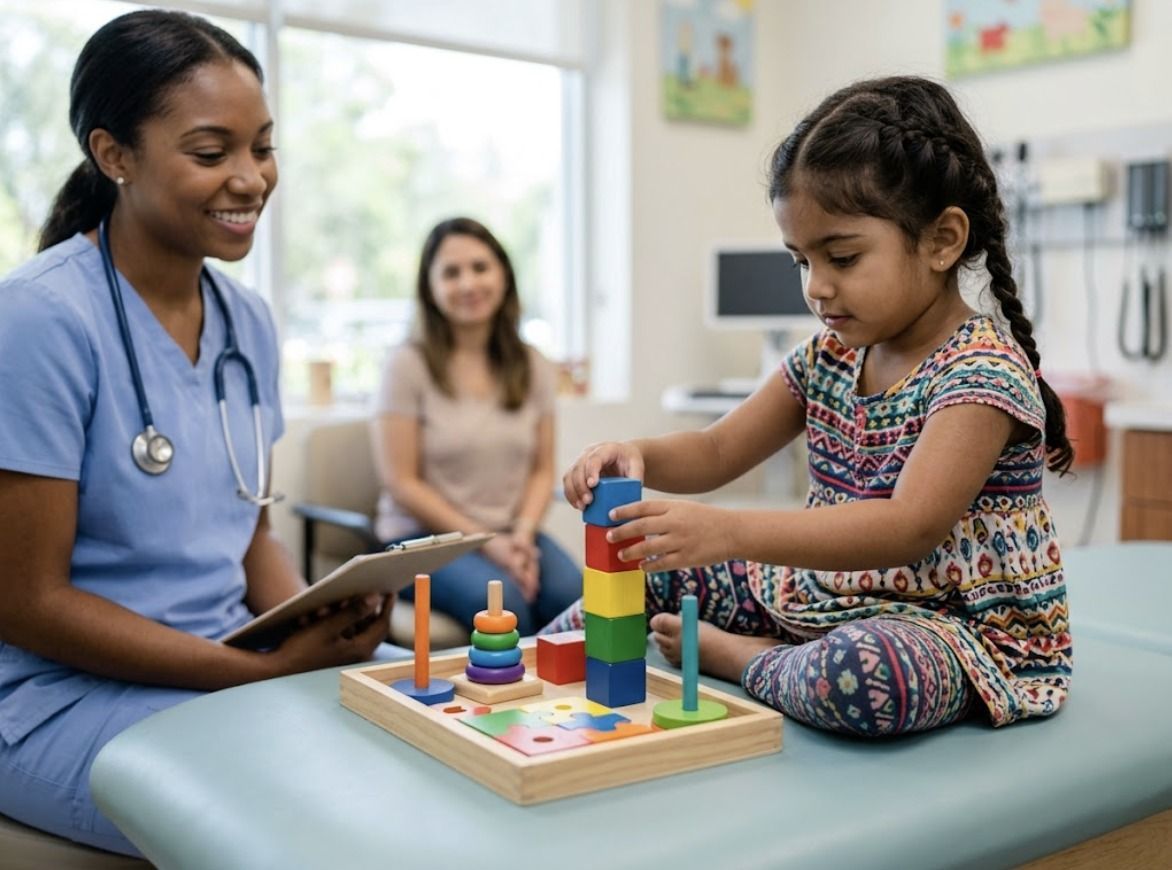
Developmental screening is a structured way to look at how a child is growing and learning.
A screening may review communication, movement, problem-solving, behavior, emotions, and social skills. In many cases, parents or caregivers complete a questionnaire about what the child regularly does at home.
The Centers for Disease Control and Prevention explains that developmental screening is more formal than everyday developmental monitoring and commonly uses a validated screening tool. The CDC also distinguishes screening from ongoing observation of developmental milestones throughout early childhood.
Developmental Screening vs. Developmental Monitoring
Developmental monitoring happens continuously.
Parents, relatives, caregivers, teachers, pediatricians, and other early childhood professionals may all notice how a child changes over time.
You may notice that your child has started:
- Reaching for objects
- Saying new words
- Following simple directions
- Walking or climbing
- Playing beside or with other children
- Showing new problem-solving skills
Developmental screening is more structured. It uses a screening tool designed to identify children who may benefit from a closer developmental assessment.
Why Pediatricians Use Screening Tools
Some developmental differences are difficult to recognize during a brief physical examination.
A child may behave differently in a medical office than at home, daycare, or school. Parent and caregiver observations therefore provide important information.
A developmental screening tool helps organize those observations and gives the pediatrician another way to assess whether development appears to be progressing as expected.
A developmental screening is not a diagnosis. A result that raises concern does not, by itself, confirm autism, developmental delay, or another developmental condition.
Understanding what a screening can and cannot tell you makes the rest of the process much easier to interpret.
What Areas of Child Development Are Reviewed?
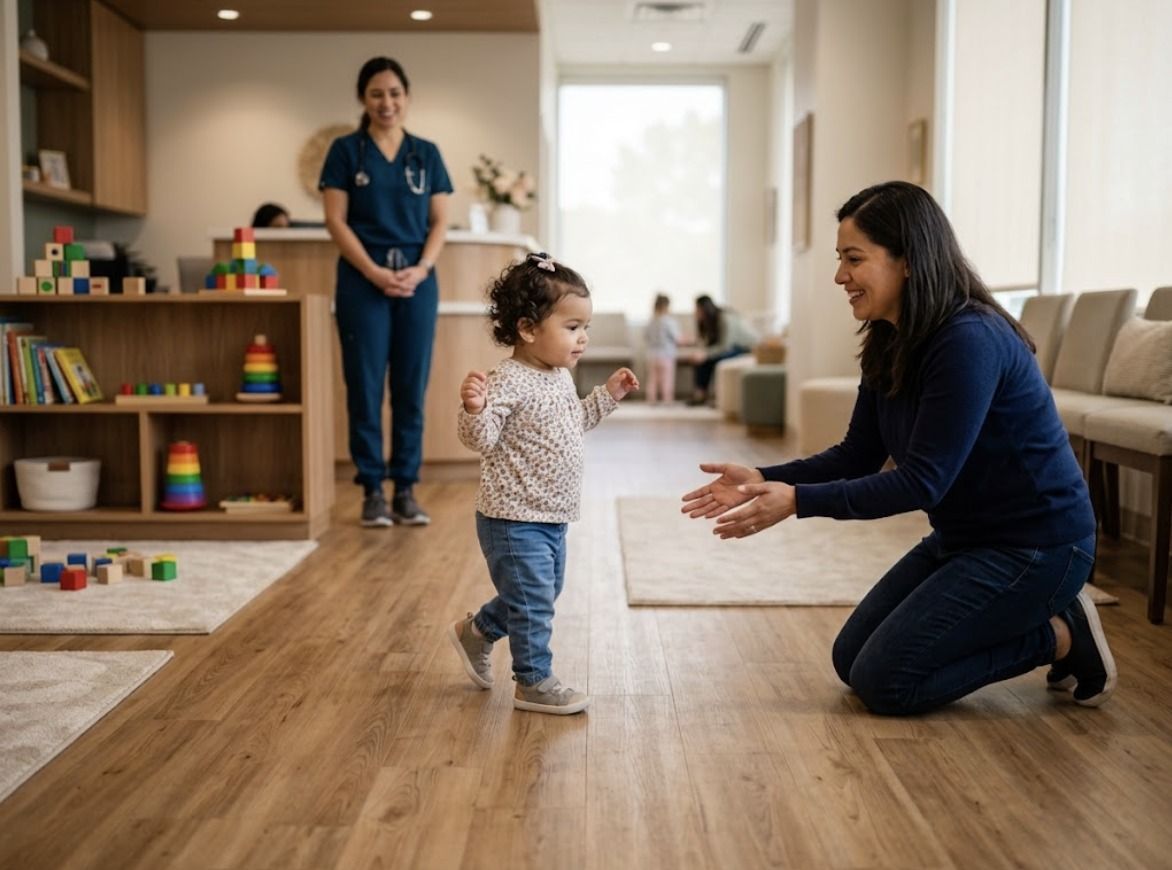
Child development involves several connected areas. A child may progress quickly in one area while taking more time in another.
A developmental screening often looks at more than one type of milestone so the provider can see a broader picture.
The following table shows common areas that may be reviewed:
| Developmental Area | Examples Parents May Notice |
|---|---|
| Gross motor | Sitting, crawling, standing, walking, running |
| Fine motor | Grasping toys, picking up small objects, using utensils |
| Speech and language | Babbling, words, phrases, following directions |
| Cognitive | Learning, memory, problem solving, exploring |
| Social and emotional | Responding to caregivers, playing with others, showing emotions |
Gross Motor Development
Gross motor skills involve larger body movements.
Depending on age, these may include holding the head steady, rolling, sitting, standing, walking, running, climbing, or balancing.
Fine Motor Development
Fine motor skills involve smaller movements of the hands and fingers.
Examples include grasping toys, transferring an object between hands, picking up small items, using utensils, stacking blocks, or drawing.
Speech and Language
Speech and language development includes more than how many words a child can say.
A pediatrician may ask about sounds, gestures, words, phrases, understanding instructions, and how your child communicates wants or needs.
Cognitive Development
Cognitive skills involve learning, attention, memory, curiosity, and problem-solving.
Young children may show these skills when they search for a hidden object, follow a simple instruction, match items, explore a toy, or figure out how something works.
Social, Emotional, and Behavioral Development
This area looks at how a child interacts with other people and responds to different situations.
Depending on age, screening questions may cover eye contact, play, emotional reactions, transitions, social interest, and responses to parents or caregivers.
These areas give parents and pediatric providers a useful framework, but the next question is usually when formal screening should happen.
When Are Developmental Screenings Recommended?
Discuss development throughout childhood, especially during routine well-child visits.
Formal screening is commonly recommended at specific ages, while additional screening may be appropriate at other times if concerns arise.
Current pediatric guidance commonly calls for general developmental screening during well-child visits at approximately:
- 9 months
- 18 months
- 30 months
A screening may also be considered outside these ages if a parent, caregiver, teacher, or pediatrician notices something that deserves closer attention.
Autism Screening at 18 and 24 Months
Autism screening is more specific than general developmental screening.
Autism specific screening is commonly recommended at approximately 18 and 24 months. A pediatrician may also consider additional screening if developmental or behavioral concerns appear at another age.
An autism screen does not diagnose autism. It helps determine whether a more detailed evaluation may be appropriate.
Knowing the recommended ages is helpful, but parents often feel more comfortable once they know what actually happens during the visit.
What Happens During a Developmental Screening?
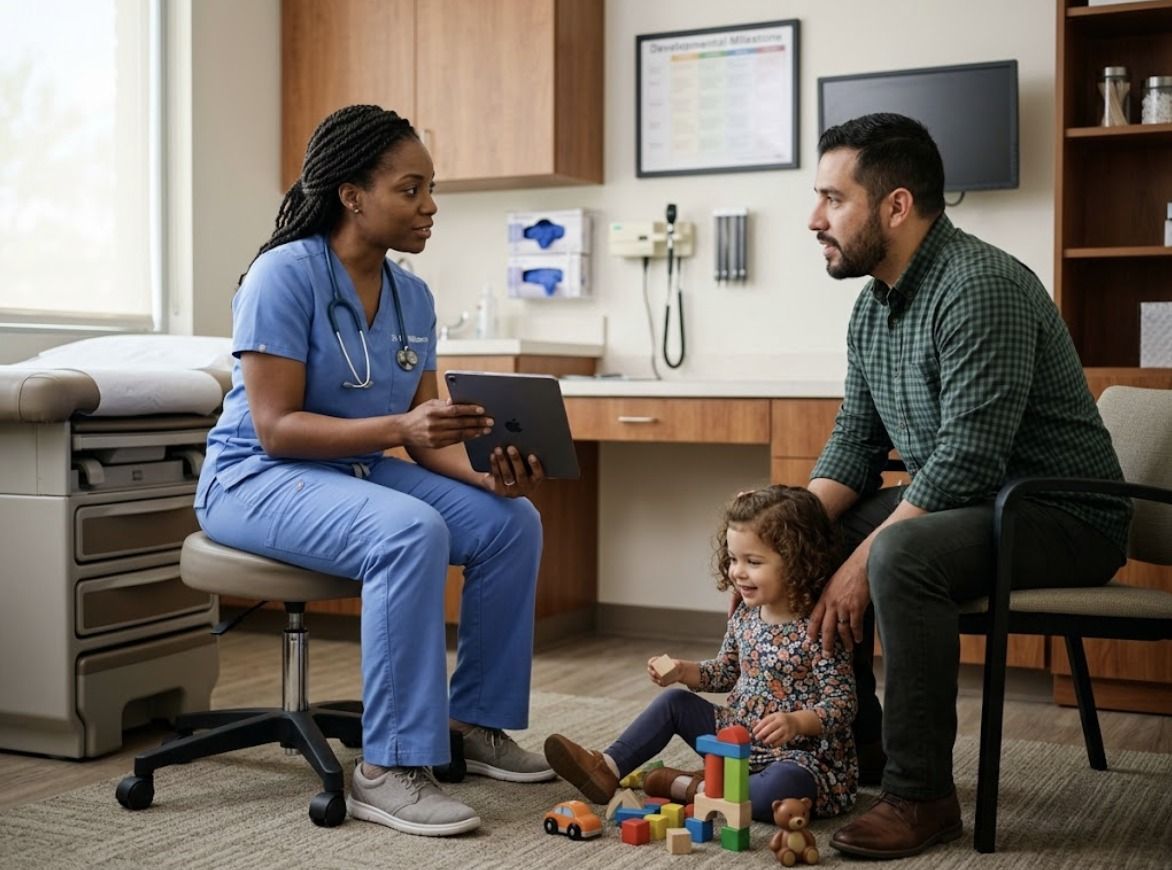
Developmental screening is usually much simpler than parents expect.
In many cases, the process involves questions about behaviors and skills you already see during everyday life.
Questions About Your Child’s Development
Your pediatric provider may ask about areas such as:
- Speech and communication
- Movement and coordination
- Play
- Learning
- Problem solving
- Behavior
- Emotional responses
- Social interaction
Parents and caregivers are important sources of information because you see your child in situations that may never happen during a medical appointment.
Try to answer based on what your child usually does rather than what you think a child of that age should be doing.
Using a Developmental Screening Tool or Checklist
Some developmental screening tools use standardized parent questionnaires. Others may include questions the provider asks or observations completed during the visit.
A developmental milestone checklist can also help parents keep track of new skills, but a general checklist is not always the same as a validated developmental screening tool.
Medical references describe formal screening instruments as part of a broader developmental assessment process, not a stand-alone diagnostic test.
Talking With Your Pediatrician
Screening results are only one part of the picture.
Your pediatrician may also consider:
- Pregnancy and birth history
- Premature birth, when relevant
- Medical history
- Hearing or vision concerns
- Family history
- Parent or caregiver observations
- Daycare or teacher feedback
- Findings from the physical examination
That broader context helps the provider decide whether monitoring is enough or whether additional evaluation may be useful.
The same information can also help parents recognize which developmental changes are worth mentioning between routine visits.
Developmental Milestones Parents May Notice at Home
A developmental milestone is a skill or behavior commonly reached during a certain stage of childhood.
Milestones can help parents follow child development, but they should not be treated as strict deadlines.
One child may begin walking earlier while another develops language skills sooner. What matters is the overall developmental pattern and whether new skills continue to appear over time.
At home, parents may notice changes in:
- How a child communicates
- How the child moves
- How the child uses the hands
- How the child plays
- How the child solves simple problems
- How the child responds to familiar people
- How the child interacts with other children
Keeping a simple checklist or a few notes can be useful before a pediatric visit.
At the same time, comparing a child closely with siblings, classmates, or children seen online can create confusion. Development varies, and pediatric providers consider much more than one isolated milestone.
A milestone becomes more meaningful when it is viewed as part of the child’s overall pattern, especially if a skill is delayed or disappears.
When Should Parents Talk to a Pediatrician About Development?
Parents do not need to wait for the next scheduled developmental screening to bring up a concern.
If something about your child’s movement, communication, learning, behavior, or social interaction continues to stand out, it is reasonable to discuss it with a pediatrician.
A Milestone Has Not Developed as Expected
Missing one milestone does not automatically mean a child has a developmental delay.
Still, persistent concerns deserve attention, especially if they affect communication, movement, learning, play, or social interaction.
A pediatrician can look at the concern in context instead of judging the child based on one skill.
A Child Loses a Skill They Previously Had
Loss of a previously acquired skill is important to mention.
For example, a child who used certain words and then stops using them, or a child who loses another established ability, should be discussed with a healthcare provider.
Parents, Caregivers, or Teachers Have Ongoing Concerns
Parents often notice changes first because they see the child every day.
Teachers, daycare staff, and other early childhood professionals may also notice patterns in communication, play, behavior, or following directions.
Bring those observations with you. Specific examples can help your pediatrician understand what you are seeing.
Once a concern is identified, the next step is not automatically a diagnosis. The provider first decides whether they need more information.
What Happens If a Developmental Screening Raises a Concern?
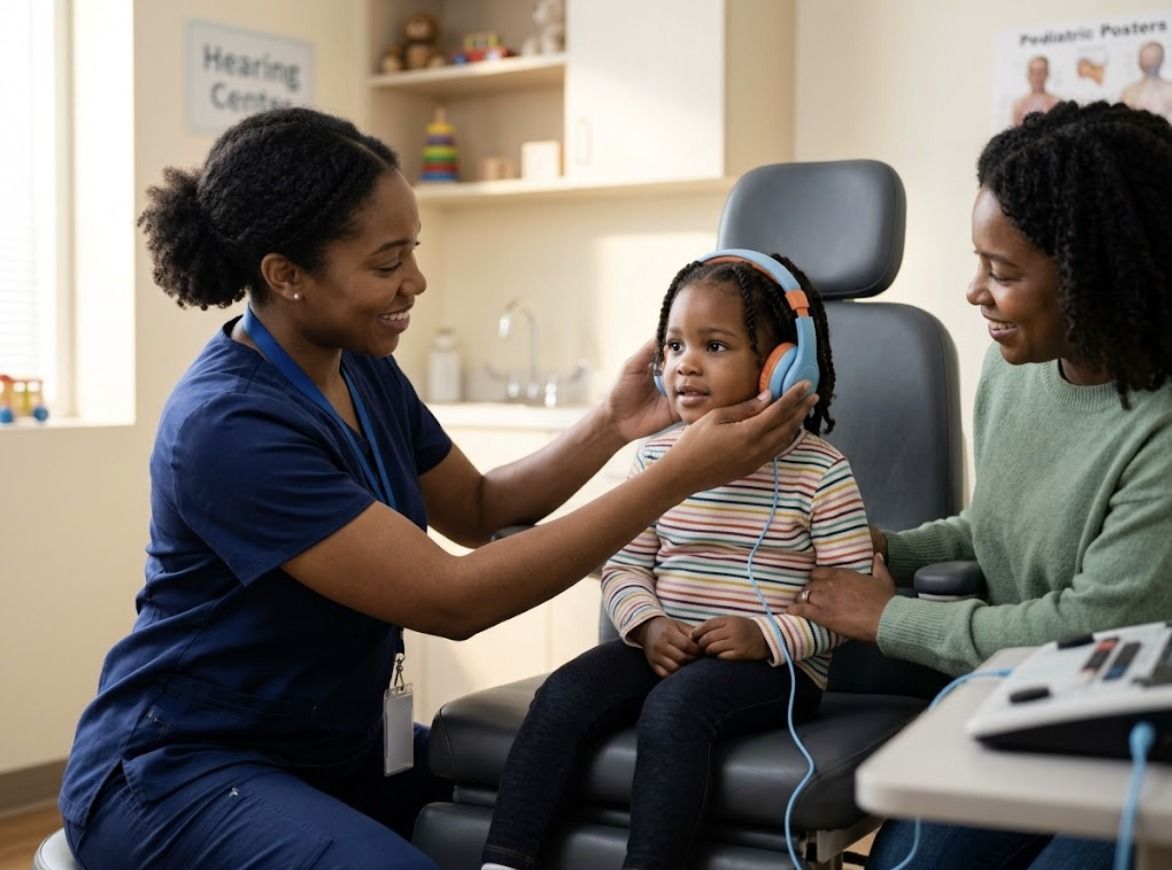
A concerning screening result can be stressful to hear, but it does not explain the cause on its own.
Screening aims to identify children who may benefit from closer assessment.
A Screening Result Is Not a Diagnosis
A developmental screening tool cannot provide a final diagnosis on its own.
Your pediatric provider may review the screening result along with the child’s medical history, developmental history, physical examination, and observations from parents or other caregivers.
This helps determine whether to monitor the result, repeat it, or follow up with a more detailed evaluation.
Additional Evaluation or Referral
Depending on the concern, possible next steps may include:
- Repeat developmental assessment
- Hearing or vision evaluation
- Speech and language evaluation
- Developmental or behavioral assessment
- Occupational therapy evaluation
- Physical therapy evaluation
- Referral to another pediatric specialist
Not every child needs each type of evaluation. Recommendations depend on the area of concern, the child’s age, and the overall clinical picture.
Early Intervention Services
Early intervention may be recommended for some children when developmental concerns are identified.
Services can differ based on the child’s needs and may include speech therapy, occupational therapy, physical therapy, or other developmental support.
Research on developmental screening has also examined how earlier identification may help connect children with appropriate evaluation and services.
Parents may sometimes discuss early intervention options while additional diagnostic assessment is still taking place.
If further evaluation is recommended, being prepared for the pediatric visit can make the conversation more useful.
How Parents Can Prepare for a Developmental Screening
You do not need to study for a developmental screening or coach your child before the appointment.
The most helpful preparation is simply paying attention to what your child does during everyday activities.
Write Down Questions and Observations
Consider making notes about:
- New skills
- Skills that seem difficult
- Speech or communication concerns
- Changes in behavior
- Social interactions
- Teacher or caregiver feedback
- Skills your child previously used but no longer shows
Specific examples are especially useful.
Instead of saying, “I am worried about her speech,” you might note how many words she regularly uses, how she asks for things, and whether she follows simple directions.
Bring Relevant Health Information
Bring any information that may help the provider understand your child’s history, including:
- Medical records
- Vaccination records
- Medication information
- Previous developmental evaluations
- Therapy records
- School or daycare reports
- Insurance information
If another provider has already evaluated your child, those records may help avoid repeating information.
Avoid Coaching Your Child
A developmental screening is not a test your child needs to pass.
There is usually no benefit in rehearsing certain skills before the visit. Parents are most helpful when they describe what the child normally does at home.
Good preparation gives the provider a clearer picture and helps families make the most of developmental care in Fort Lauderdale.
Developmental Screenings in Fort Lauderdale at Manor Plaza Pediatric & General Medicine
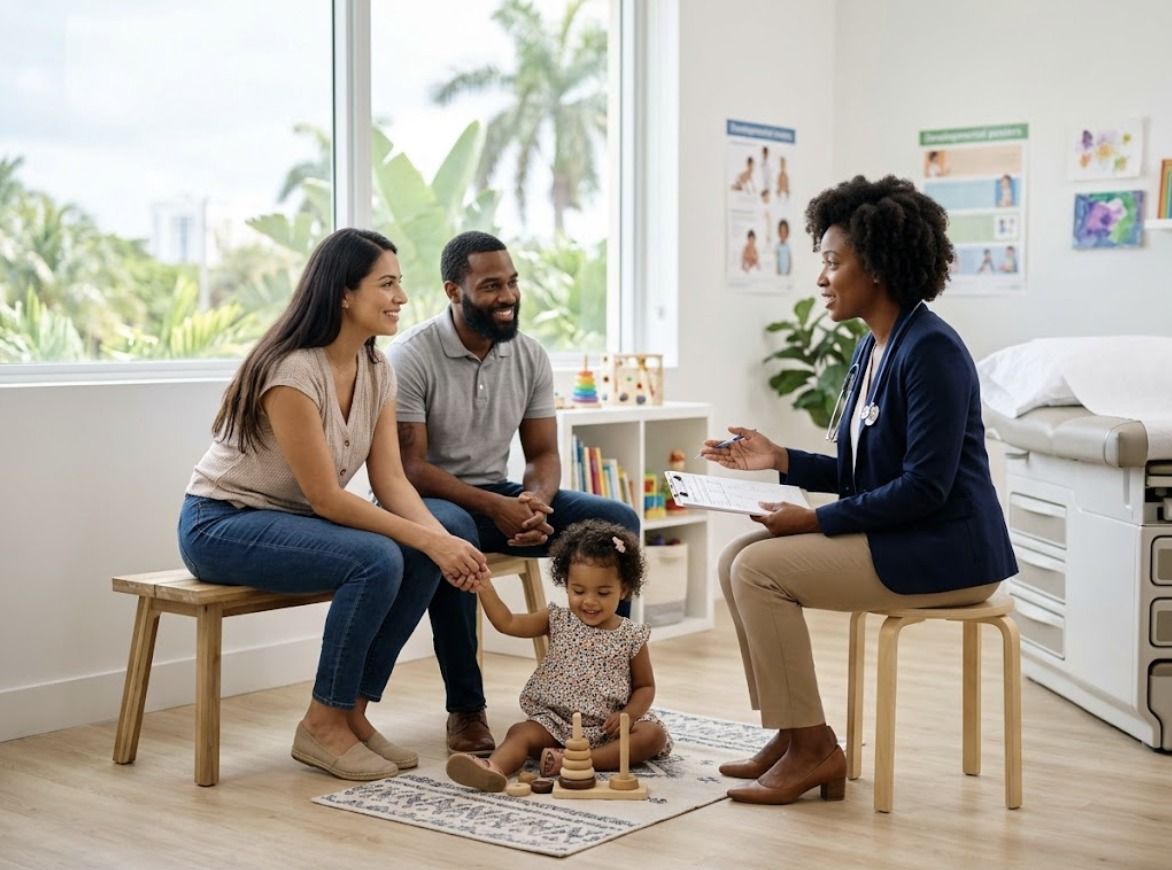
Developmental care works best when parents feel comfortable asking questions.
At Manor Plaza Pediatric & General Medicine, we provide pediatric care for children and teens in Fort Lauderdale, including routine checkups, sick visits, vaccinations, physicals, developmental services, and behavioral health consultations.
Our goal is to give families clear information and practical next steps without making healthcare feel complicated.
For busy parents, access also matters. Manor Plaza welcomes walk-ins and offers same-day support when available. The practice accepts insurance and offers cash pay options, which can help families manage care in a way that fits their circumstances.
Developmental screenings may be part of routine pediatric care or may be discussed when a parent has a specific concern about speech, movement, learning, behavior, or social development.
For many families, the most useful first step is simply bringing those questions to a pediatric visit.
Frequently Asked Questions About Developmental Screenings
1. What is a developmental screening?
A developmental screening is a structured assessment that looks at areas such as communication, movement, learning, behavior, emotions, and social development.
It often involves a screening tool or parent questionnaire and helps identify whether a child may benefit from closer evaluation.
2. At what ages should children receive developmental screenings?
General developmental screening is commonly recommended at approximately 9, 18, and 30 months.
Autism specific screening is commonly recommended at 18 and 24 months.
Additional screening may be appropriate at another age if a parent, caregiver, teacher, or healthcare provider has a developmental concern.
3. Does a developmental screening diagnose autism?
No.
A developmental screening or autism screening may identify signs that deserve further evaluation, but the screening itself does not establish a diagnosis.
A more detailed developmental and behavioral assessment may be needed before a diagnosis can be made.
4. What happens if my child does not meet a developmental milestone?
One missed milestone does not automatically mean your child has a developmental delay.
Discuss the concern with your pediatrician. The provider can review your child’s overall development and decide whether continued monitoring, developmental screening, or further evaluation makes sense.
If your child loses a previously established skill, mention that change promptly.
5. Can I request developmental screening if I am concerned about my child?
Yes.
Parents can bring up developmental concerns at any pediatric visit. You do not need to wait until a particular screening age if something about your child’s communication, movement, learning, behavior, or social interaction concerns you.
Supporting Your Child’s Development Starts With Paying Attention
Child development happens gradually, and parents often notice subtle changes before anyone else does.
Developmental monitoring at home, routine pediatric checkups, and formal developmental screenings can work together to provide a clearer picture of how your child is progressing.
A screening result does not define your child and does not provide a diagnosis by itself. It simply helps identify when closer evaluation or additional support may be appropriate.
If you have questions about your child’s milestones or would like to discuss developmental screenings in Fort Lauderdale, Manor Plaza Pediatric & General Medicine is here to help. You can request an appointment, call the office, or ask about walk-in availability for your child’s next visit.
Guerlyne Desir, FNP-BC
Guerlyne Desir, FNP-BC, is a board-certified Family Nurse Practitioner at Manor Plaza Pediatric & General Medicine in Fort Lauderdale, FL. She provides compassionate care for children, adults, and families, with a focus on preventive health, routine checkups, and accessible primary care. She is licensed in Florida as an Advanced Practice Registered Nurse and holds Family Nurse Practitioner certifications through AANP and ANCC.